
Mobile apps are no longer just a digital add-on—they’re a core business asset. In 2026, companies across industries are investing heavily in mobile-first strategies to improve customer engagement, streamline operations, and drive revenue.
Whether you’re a startup validating an idea or an enterprise scaling digitally, understanding the complete mobile app development ecosystem is essential. This guide covers everything from basics to execution, while helping you make smarter decisions at every stage.
Mobile app development is the process of designing, building, and deploying applications for smartphones and tablets. It includes frontend interfaces, backend logic, APIs, and testing.
But in reality, it’s much more than coding. It involves strategy, user experience, performance optimization, and security.
If you’re new to this space, you should first understand the fundamentals in detail through this What is Mobile App Development (Beginner to Advanced Guide) page (/what-is-mobile-app-development/), as it breaks down concepts more deeply.
From a business perspective, working with a professional team for development ensures better scalability and performance, which is why many companies rely on expert mobile app development services to get started efficiently.
Choosing the right app type directly impacts performance, cost, and time to market.
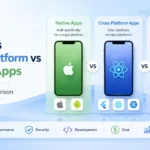
Native apps are built specifically for platforms like iOS or Android, offering high performance and better user experience. On the other hand, cross-platform apps allow you to build once and deploy everywhere, which is why many startups prefer solutions like cross-platform app development services to reduce cost and time.
Hybrid apps combine web and native features, while wearable apps are designed for devices like smartwatches and fitness trackers—an emerging segment growing rapidly in 2026.
If you’re confused about which approach fits your project, this detailed comparison on Native vs Cross-Platform vs Hybrid Apps (/native-vs-cross-platform-vs-hybrid/) will help you make the right choice.
Businesses targeting Apple users often invest in iOS app development (https://startuplabs.io/ios-app-development/), while Android app development services are essential for reaching a broader global audience. Similarly, wearable app development is becoming important for health-tech and IoT-based solutions.
A well-defined development process ensures your app is built efficiently and without costly errors.
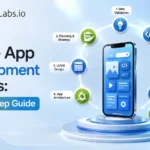
It typically starts with idea validation and research, followed by wireframing, UI/UX design, development, testing, and finally deployment. Each step plays a critical role, and skipping any can impact the final product.
Here’s a quick overview of the stages:
For a deeper breakdown of each phase, you can explore the complete Mobile App Development Process (Step-by-Step Guide) (/mobile-app-development-process/), which explains every stage in detail.
Testing is one of the most crucial parts of this process. Without proper QA, even a well-developed app can fail. That’s why businesses often follow structured mobile app testing strategies (/mobile-app-testing-strategies/) and invest in professional mobile app testing services to ensure performance and security.
Partnering with a reliable development team also ensures that every phase is handled properly, which is where mobile app development services play a key role.
UI/UX design is one of the biggest factors behind app success or failure. A poorly designed app—even with great features—can result in high uninstall rates.
Modern mobile app design focuses on simplicity, personalization, and smooth navigation. Users expect fast, intuitive, and visually appealing interfaces.
Key principles that drive great mobile app design today include:
If you want to understand design principles in detail, this UI/UX Design in Mobile Apps: Complete Guide (/ui-ux-mobile-app-design/) explains how design impacts engagement and conversions.
Businesses aiming for high retention rates usually combine strong design with professional mobile app development services to ensure both functionality and usability are aligned.
Your technology stack determines how scalable, secure, and future-ready your app will be.
It includes frontend technologies like Swift, Kotlin, Flutter, or React Native, along with backend frameworks and databases. Choosing the wrong stack can lead to performance issues and increased costs later.
In 2026, the mobile tech landscape looks like this:
To make the right decision, you should explore this detailed guide on how to choose the right mobile app technology stack (/mobile-app-tech-stack/), which explains different options based on project needs.
You can also check out top mobile app development frameworks in 2026 (/mobile-app-frameworks-2026/) to understand current trends.
For startups looking to optimize cost and speed, cross-platform app development services are often a practical choice, while custom solutions are usually handled through full-scale mobile app development services.
Cost is one of the most common concerns when building a mobile app.
In 2026, development costs depend on features, complexity, design, and location of the development team. For example, apps developed in the USA are generally more expensive compared to India.
Here’s a practical breakdown for 2026:
| App Type | USA (Approx.) | India (Approx.) |
| Simple App | $50,000 – $100,000 | $10,000 – $25,000 |
| Mid-Complexity App | $100,000 – $250,000 | $25,000 – $80,000 |
| Complex / Enterprise App | $250,000 – $500,000+ | $80,000 – $200,000+ |
Developer hourly rates vary significantly by geography. US-based developers typically charge $100–$180/hour, while experienced developers in India charge $20–$65/hour. That’s a 60–75% cost difference for comparable quality — which is why companies like StartUpLabs, operating across both the USA and India, offer a genuinely competitive advantage.
Beyond development hours, don’t forget to account for design, testing, third-party integrations, App Store fees, and post-launch maintenance — which typically runs 15–20% of your initial build cost annually.
A smart approach? Always keep a 30–40% budget buffer for scope changes and unforeseen challenges. And starting with an MVP rather than a full-feature product is almost always the right financial move.
If you want a complete breakdown, including regional pricing, you should check this detailed Mobile App Development Cost in 2026 guide (/mobile-app-development-cost/).
Platform choice also affects cost. Building separate apps through iOS app development and Android app development services can be more expensive than choosing a unified approach through mobile app development services.
The timeline for app development varies depending on complexity and features.
As a general guide for 2026:
Factors that directly affect your timeline include the number of platforms you’re targeting, the complexity of your UI/UX design, the number of third-party integrations, the size and experience of your development team, and how clearly requirements are defined from day one.
Unclear requirements and scope creep are the two biggest timeline killers we see consistently. Starting with a well-defined project scope and working in agile sprints keeps things moving.
For a detailed breakdown of timelines based on app types, you can explore how long it takes to build a mobile app (/app-development-timeline/).
Working with experienced teams offering mobile app development services helps streamline the process and avoid unnecessary delays.
Security has become a top priority in mobile app development, especially with increasing data breaches and regulations.
Some of the most critical security practices include:
For regulated industries, compliance requirements add another layer. Apps in the financial space need to meet PCI-DSS standards. Health apps must comply with HIPAA. In Europe, GDPR applies. In California, CCPA. Getting these wrong isn’t just a technical problem — it’s a legal and reputational one.
To understand best practices, you can explore app security best practices (/mobile-app-security-best-practices/) and fintech app development compliance (/fintech-app-pci-compliance/).
Security testing is equally important, which is why companies invest in mobile app testing services along with development to ensure data protection.
Mobile apps are now essential for business growth. They provide direct access to customers, improve engagement, and create new revenue channels.
From eCommerce to healthcare and fintech, every industry is leveraging mobile apps to stay competitive.
For businesses, a well-built mobile app delivers:
The global mobile app market is projected to grow significantly through the end of the decade. Businesses that invest now are positioning themselves ahead of competitors still relying solely on web presence.
If you want to explore real-world benefits, this guide on why businesses need a mobile app in 2026 (/why-business-needs-mobile-app/) explains the impact in detail.
To achieve these benefits, businesses often rely on professional mobile app development services to build scalable and user-friendly applications.
Hiring the right developers is critical for project success.
You can choose between freelancers, in-house teams, or agencies. Each option has its pros and cons depending on your budget and project scope.
Key factors when hiring mobile app developers in 2026:
Engagement models vary too. Fixed-price contracts work well for clearly scoped projects. Time-and-material works better for evolving or complex builds. Dedicated team models (where you hire a team that works exclusively on your project) are increasingly popular for startups scaling fast.
Before making a decision, you should go through this detailed guide on how to hire mobile app developers (/hire-mobile-app-developers/), which explains key factors like expertise, communication, and support.
Most businesses prefer agencies offering mobile app development services because they provide end-to-end solutions.
If you’re a startup, your first question shouldn’t be “how do I build the perfect app?” It should be “how do I build the right app as quickly and cheaply as possible — and then learn from real users?”
That’s exactly what a Minimum Viable Product (MVP) is designed to do. An MVP is a version of your app that includes just enough features to validate your core hypothesis with real users. Nothing more, nothing less.
The benefits of starting with an MVP are well-documented:
A good MVP isn’t a half-baked product. It’s a focused product that does one thing really well and proves there’s a market for it.
Startups can benefit from structured MVP strategies explained in the MVP in mobile app development guide (/mvp-in-mobile-app-development/), which focuses on lean development.
Many startups combine MVP strategies with mobile app development services to accelerate time to market.
You’ve built a great app. Now comes the part most teams underestimate — getting it live.
Deploying to the App Store and Google Play is not a one-click process. Apple’s App Store review process can take anywhere from 24 hours to several days, and rejection is not uncommon if guidelines aren’t followed closely. Google Play is generally faster, but still requires proper setup.
Key launch activities include:
Post-launch, the work continues — monitoring reviews, releasing rapid bug fixes, and pushing the first meaningful update within the first 30 days keeps user ratings healthy.
You can learn the exact steps through how to upload an app to Google Play Store (/upload-app-google-play-store/) and follow a complete mobile app launch checklist (/mobile-app-launch-checklist/) to avoid last-minute issues.
Working with experienced mobile app development services ensures a smooth launch process.
Many apps fail due to avoidable mistakes such as poor planning, weak security, or ignoring user feedback.
Understanding these mistakes early can save time, cost, and effort.
Here are some of the most common ones:
You should review the top mobile app development mistakes to avoid (/mobile-app-development-mistakes/) to ensure your project stays on track.
Professional mobile app development services help minimize these risks through structured development processes.
At StartUpLabs, we build mobile applications for startups, growth-stage businesses, and enterprises across the USA and India. Our teams cover every aspect of the mobile development lifecycle — from early-stage discovery and UX strategy, all the way through to deployment, testing, and post-launch support.
Whether you need a native iOS app, a cross-platform Flutter build, a wearable integration, or a full-service team from idea to launch — we’ve done it, and we can do it for you.
Our expertise includes:
We work with startups and enterprises across the USA and India, delivering high-quality solutions with global standards.
Mobile app development in 2026 is all about combining strategy, technology, and user experience. Businesses that invest in the right approach—from choosing app type to ensuring security—are the ones that succeed.
If you’re planning to build or scale your mobile app, working with the right team can make all the difference. Explore professional mobile app development services to get started with a reliable and scalable solution.
Ans: Mobile app development is the process of designing, building, testing, and deploying software applications for smartphones, tablets, and wearable devices. It covers everything from the initial idea and UX design to backend development, QA testing, and post-launch maintenance.
Ans:Native, cross-platform, hybrid, and wearable apps.
Ans: App development costs in 2026 range from $10,000 for simple apps to $300,000+ for complex enterprise solutions. Development in India is typically 60–70% more affordable than in the USA, with comparable quality from experienced teams.
Ans: Simple apps typically take 2–4 months. Mid-complexity apps take 4–7 months. Complex platforms with advanced features can take 7–12 months or more. Timeline is heavily influenced by project scope, team size, and how clearly requirements are defined.
Ans: An MVP (Minimum Viable Product) is a simplified first version of your app that validates your core idea with real users before you invest in the full build. For startups and new products, starting with an MVP is almost always the smarter financial and strategic decision.
Ans: Look for a company with a strong portfolio in your industry, transparent pricing, a structured development process, and solid post-launch support. Checking real client reviews on platforms like Clutch or GoodFirms is a good starting point.
Ans: For native iOS: Swift/SwiftUI. For native Android: Kotlin/Jetpack Compose. For cross-platform: Flutter (dominant in 2026) or React Native. Backend choices depend on your app’s complexity and data needs — Node.js, Python, and Firebase are all widely used.
Ans: Extremely important. Security vulnerabilities in mobile apps can lead to data breaches, legal penalties, and permanent reputational damage. Security should be built into every layer of development — from authentication and encryption to API design and third-party integrations.

The StartUpLabs Team consists of technology and digital marketing experts passionate about helping businesses grow. We share industry insights and best practices in software development, AI, web and mobile solutions, and digital marketing.

Get Quote Now
Recent Post